
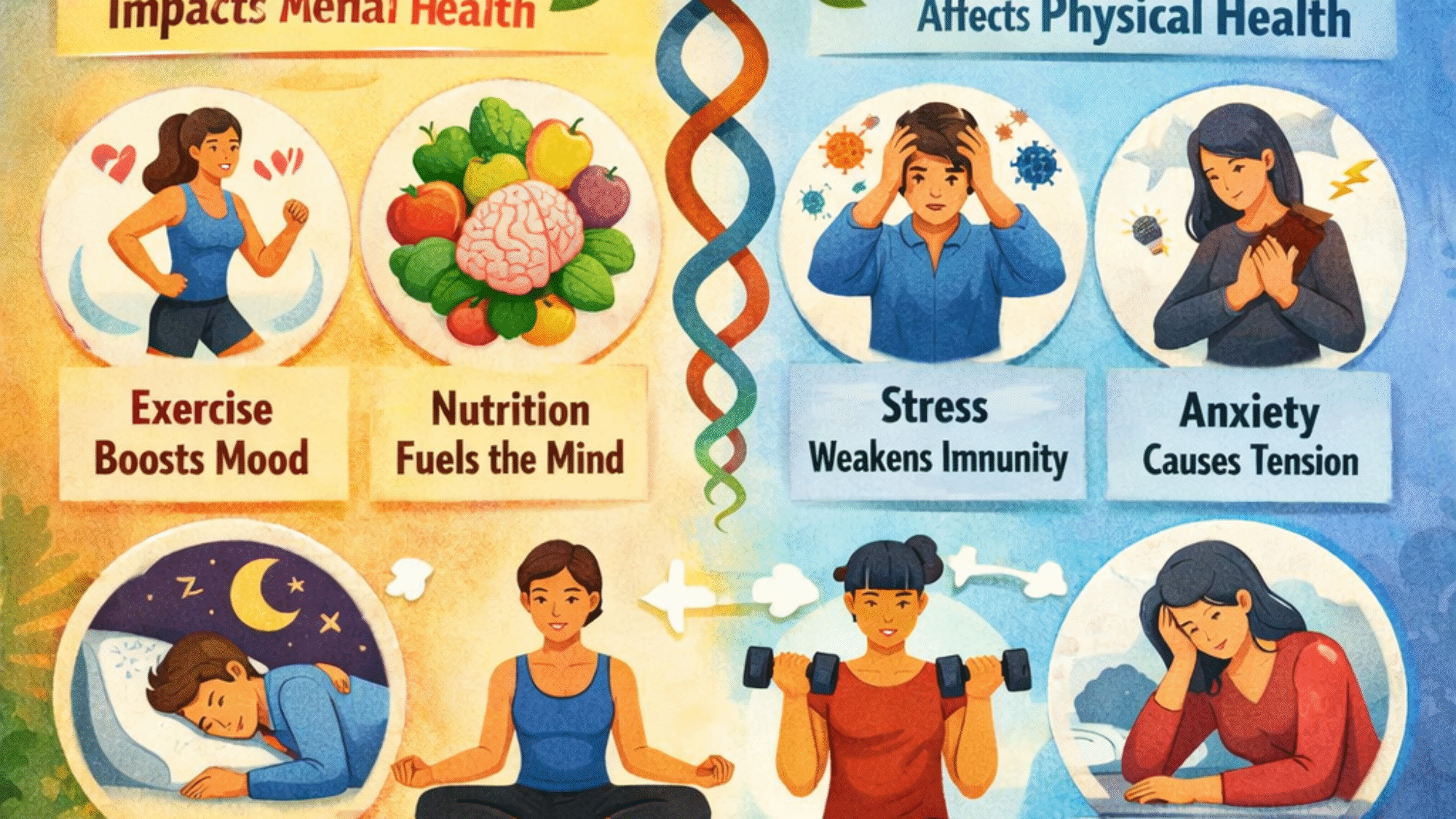
In today’s fast-paced world, people often focus on either physical fitness or mental wellbeing, assuming they are separate aspects of health. In reality, physical health and mental health are closely connected, and each one strongly influences the other. A healthy body supports a stable and positive mind, while good mental wellbeing helps the body function more efficiently. Understanding this relationship is essential for maintaining a balanced lifestyle and improving overall quality of life.
What Is Physical Health?
Physical health refers to the overall condition of the body and its ability to perform daily activities efficiently. It involves several important factors such as regular exercise, balanced nutrition, adequate sleep, and the absence of illness or disease. When the body is healthy, energy levels remain high, immunity becomes stronger, and the risk of chronic diseases decreases.
However, physical health is not only about fitness or appearance. It also includes how well the body’s systems—such as the heart, brain, muscles, and immune system—work together to maintain stability and strength.
What Is Mental Health?
Mental health involves emotional, psychological, and social wellbeing. It affects how individuals think, feel, and respond to everyday situations. Good mental health allows people to handle stress effectively, build positive relationships, and make thoughtful decisions.
When mental health is strong, individuals usually feel motivated, confident, and emotionally balanced. On the other hand, poor mental health can lead to problems such as stress, anxiety, depression, or difficulty concentrating. These challenges can eventually influence physical health as well.
How Physical Health Impacts Mental Wellbeing
One of the most powerful ways to improve mental wellbeing is through maintaining good physical health. Several lifestyle habits directly affect mood, brain function, and emotional stability.
- Exercise and Mental Health
Regular physical activity is known to improve mood and reduce stress levels. When people exercise, the body releases chemicals called endorphins, which help create feelings of happiness and relaxation. Activities such as walking, jogging, cycling, yoga, or strength training can significantly reduce symptoms of anxiety and depression.
Exercise also improves sleep quality and increases energy levels, both of which are essential for maintaining emotional balance.
- Nutrition and Brain Function
A healthy diet plays a vital role in supporting mental health. Nutrient-rich foods such as fruits, vegetables, whole grains, nuts, and healthy fats provide the brain with essential vitamins and minerals. These nutrients help regulate mood, improve concentration, and support cognitive function.
Poor eating habits, excessive processed foods, and high sugar intake may lead to fatigue, mood swings, and reduced mental clarity.
- Sleep and Emotional Stability
Sleep is another crucial link between physical and mental health. Lack of sleep can negatively affect memory, focus, and emotional control. People who consistently sleep poorly may experience increased stress, irritability, and anxiety.
Maintaining a consistent sleep schedule allows the body and brain to recover, repair, and function properly.
How Mental Health Affects Physical Health
The connection between mental and physical health works both ways. Mental health challenges can lead to several physical symptoms and long-term health problems.
For example, chronic stress can weaken the immune system, making the body more vulnerable to infections and illnesses. High levels of stress may also increase the risk of conditions such as high blood pressure, heart disease, and digestive problems.
In addition, individuals struggling with anxiety or depression often find it difficult to maintain healthy habits. They may lose motivation to exercise, eat unhealthy foods, or avoid routine medical checkups. Over time, these behaviors can negatively affect physical wellbeing.
Mental stress can also appear in the form of physical symptoms such as headaches, muscle tension, fatigue, or stomach discomfort. These signs highlight how deeply the mind and body are connected.
Lifestyle Habits That Support Both Body and Mind
Improving both physical and mental health requires a balanced lifestyle that supports the needs of the body and mind simultaneously.
Some of the most effective habits include:
Regular exercise to improve mood and strengthen the body
Balanced nutrition to support brain and body functions
Quality sleep to maintain emotional and physical recovery
Stress management techniques such as meditation, breathing exercises, or mindfulness
Strong social connections with friends and family for emotional support
Engaging in hobbies, spending time outdoors, and taking regular breaks from work can also help maintain mental clarity and reduce stress.
The Importance of Seeking Professional Help
While lifestyle changes can improve overall wellbeing, some situations require professional support. Doctors, psychologists, counselors, and therapists can provide expert guidance for both physical and mental health concerns.
Early treatment and proper care can prevent small issues from becoming serious problems. Modern healthcare increasingly recognizes the importance of treating both mental and physical health together for better long-term outcomes.
Conclusion
The relationship between physical and mental health is powerful and inseparable. A healthy body helps maintain emotional stability, while a strong and balanced mind supports physical wellbeing. By focusing on regular exercise, proper nutrition, good sleep, and stress management, individuals can improve both aspects of their health.
Understanding this connection encourages a holistic approach to wellbeing—one that values both the body and the mind. When people take care of both, they create the foundation for a healthier, happier, and more fulfilling life.